


Preserving roses with glycerin gives you petals that stay soft and vibrant long after air-drying ever could. By using a 1:2 glycerin-to-water solution, stems naturally pull that mixture into their tissues, swapping out sap and keeping each bloom wonderfully pliable. I’ve seen this method save countless wedding bouquets and shop displays from turning brittle or patchy.
Why Glycerin Preservation Works
Glycerin slips into petals and stems via their xylem channels, replacing natural water with a humectant that locks in both pliability and rich color. In my experience, a 1:2 glycerin-to-water blend reaches ideal thickness for uptake over 2–3 weeks, ensuring you end up with roses that feel almost alive.
You won’t deal with the uneven drying or crinkled edges that plague simple air-cured flowers. Instead, you get consistent softness and depth of hue—and it lasts for 6–12 months indoors without fading.
Preparation Essentials
Gather your supplies first:
- A clean, tall container
- Food-grade glycerin
- A measuring jug
- Sharp shears
Trim each stem at a 45° angle, strip off any lower foliage, and use lukewarm water to dissolve the glycerin quickly. Cool solutions slow down absorption—and nobody wants to wait forever.
Comparison of Glycerin Preservation Methods
Below is a quick overview of the most popular glycerin techniques, their ratios, treatment times, and the key trade-offs you’re likely to encounter.
| Method | Glycerin Ratio | Treatment Time | Pros and Cons |
|---|---|---|---|
| Stem Immersion | 1:2 | 2–3 weeks | + Even uptake – Patience required |
| Water Uptake | 1:2 | 7–10 days | + Faster results – Needs vacuum pump or presoaked cuttings |
| Silica Hybrid | 1:4 | 4–5 days | + Shape holds perfectly – Slightly less softness |
Whether you’re planning a bridal trial or gearing up for shop inventory, this table will help you choose the right pace and texture for your project.
Common Pitfalls
- Air bubbles can clog xylem channels—if uptake stalls, recut stems underwater.
- Dirty containers often spark algae growth, which chokes the solution.
- Watch temperature: sudden dips or spikes can shock petals and stall absorption.
“Small temperature shifts—just a few degrees—go a long way toward smoothing uptake.”
Anticipated Outcomes
With this approach, roses stay display-ready for 6–12 months under typical indoor conditions. I once treated 50 wedding stems three weeks in advance—no last-minute panic, just flawless centerpieces on the big day.
Practical scenarios:
- DIY Wedding Bouquets: Treat blooms early so you can focus on styling.
- Retail Inventory: Stock pre-preserved roses for instant, maintenance-free arrangements.
- Event Rentals: Use durable roses that stand up to handling and transport.
Get started by selecting fresh, fully opened roses and mixing your glycerin solution in a sanitized vessel. Track each stem’s weight gain and texture every few days—and you’ll catch any hiccups before they ruin your display.
Gathering Materials And Preparing Roses
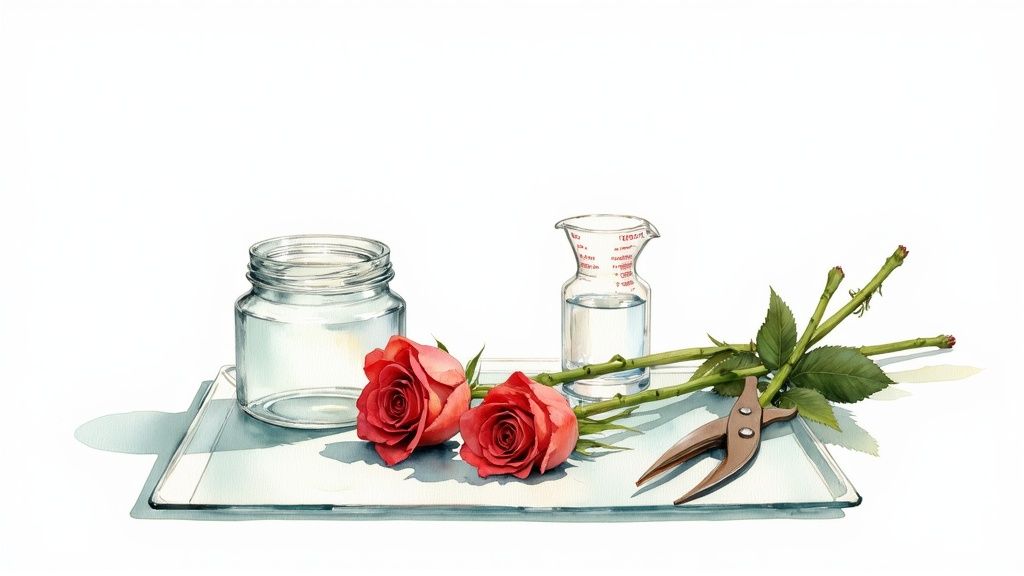
First things first: lay out every tool you’ll need before you touch a single stem. Running back and forth for supplies only slows down the glycerin uptake.
Pick containers that match your bouquet size—too tight and stems crowd, too big and you waste solution. Then double-check the glycerin label; any impurities will drag down absorption and encourage algae.
A quick wash with mild soap and a vinegar rinse clears off films that block xylem channels. After that, sharpen your shears and make fresh cuts at a 45° angle. Stripping away the lower leaves keeps them from rotting below the water line, which could taint your entire batch.
A spotless setup and a solid tracking system matter just as much as the glycerin ratio.
Here’s what I always have at the ready:
- Measuring Jug or scale for exact glycerin-to-water ratios
- Sharp Shears for precise angled cuts and leaf removal
- Clean Containers, each labeled by batch date
- Lukewarm Water to help the glycerin dissolve quickly
- Inventory Log (spreadsheet or notebook) to track each stem’s weight and progress
Choosing Rose Stems
When selecting blooms, look for roses that are just past the bud stage—petals firm but open enough for sap flow. Skip any with floppy petals or brown edges; they won’t preserve well.
If you’re working with salvaged event bouquets, trim away bruised blooms first. Then recut each stem underwater in lukewarm water to avoid air bubbles blocking the xylem.
Choosing The Right Container Size
Your container choice makes a big difference. I favor tall glass jars so stems stay upright and I can watch the solution level drop. Plastic bins work fine too, as long as you clearly label each batch.
Leave about 2 inches of headspace above the liquid. That extra room helps the glycerin mixture soak in evenly and makes topping off easier.
Preparing The Glycerin Solution
Before anything goes in the jar, mix up the solution:
| Ingredient | Ratio |
|---|---|
| Glycerin | 1 Part |
| Lukewarm Water | 2 Parts |
Stir gently until fully dissolved. I always test one stem first—if it hesitates, I tweak the water temperature or give it another fresh cut.
Tracking And Scheduling
Once your stems are in, jot down the start date in your log. Expect 2–3 weeks for full preservation. I set reminders to check levels twice a week and note any weight changes.
Consistent monitoring prevents surprises and makes sure each rose reaches its peak. Fiore clients can reach out for tailored advice or an on-site consultation.
Master Stem Immersion Technique

Starting with a warm bath of glycerin, this process trades out the rose’s sap for a longer shelf life. I usually blend 2 parts water with 1 part glycerin, warming the mix until it’s comfortably lukewarm.
Position stems just beneath the first leaf node; that’s where the magic happens and glycerin climbs into those petals. On a recent bridal trial, late-season garden roses spent about three weeks in the solution. Thicker stalks? Ramp up to a 1:1 ratio for better uptake.
- Choose a clean glass vase at least 12 inches tall
- Trim stems on a 45° angle so they absorb better
- Check liquid level every three days
- Stir gently to avoid any sediment settling
Monitoring Solution Levels
Keep a simple journal noting every top-off and replacement. Algae creeping in means it’s time for a fresh batch. If you see the solution dip by more than half, refill with the same 2:1 ratio blend.
Topping off regularly prevents sudden shocks in concentration that can stall glycerin uptake
- Spot air bubbles? That’s trapped air in the xylem—tilt and tap gently
- Notice the solution fading in color as glycerin works its way into roses
- For large batches, a full mixture change once a week keeps things moving
Confirming Full Absorption
Expect the process to run 2–3 weeks, though thinner stalks may finish closer to the 10-day mark. You’ll feel extra weight in the stem and see petals softening back to a natural suppleness.
| Stem Type | Glycerin Ratio | Expected Time |
|---|---|---|
| Thin Garden Roses | 2 parts water | 10–14 days |
| Standard Stems | 2 parts water | 14–21 days |
| Thick Varieties | 1:1 | 21–28 days |
Once full absorption is confirmed, blot stems gently and let them air dry in the shade. Direct sunlight can cause bleaching, especially on white or dyed blooms.
Tips For Bridal Centerpieces
Before the big day, I run a color test on just a handful of dyed roses. White and pastels prefer a gentler 1:2 ratio, while deep reds and purples stand up well to 1:1.
If you need extra help, consider a Fiore consultation for large-scale events. Our team customizes glycerin blends and stem lengths to match your timeline and aesthetic seamlessly.
Fiore offers on-site glycerin preparation and custom matching for flawless event setups
- Schedule treatments about two weeks before your event
- Label each batch with the date and rose variety for easy tracking
Increasing Color Integrity
Every rose has its nuances. I always trial a single bloom when working with dyed varieties to avoid surprises. This step ensures you don’t end up with uneven or overly dark petals.
- For crisp whites and pastels, start with 1 part glycerin to 2 parts water
- Switch to 1:1 when preserving rich, saturated hues
Now that you’ve mastered stem immersion, you’re set to create stunning, long-lasting displays that will charm any room or celebration.
Speed Up Preservation With Water Uptake
Pulling glycerin straight into rose stems can shrink preservation time from weeks down to days. It’s a game-changer when you’re racing to fulfill last-minute orders. To start, slice each stem at a 45° angle underwater—this simple cut clears air pockets and primes the xylem for maximum uptake.

- Floral tubes that cradle solution at the stem tip for one-by-one care
- Vacuum suction rigs pulling glycerin steadily through dozens of stems
- Syringe setups designed to purge air and keep flow consistent
Fine-tuning that flow is key to avoiding oversaturation or wasted glycerin.
Setting Up Tubes And Rigs
Tubes clip onto single stems in seconds. A vacuum rig, on the other hand, demands a tight seal—test it with a pressure gauge before you begin.
- Choose clear tubes so you can watch the solution rise
- Secure with silicone caps for leak-free connections
- Run a quick vacuum test to catch any weak points
Seeing bubbles stall? You’ll spot blockages long before they ruin an entire batch.
Key Tools For Water Uptake
For a handful of roses, you only need a floral tube, a syringe, and an adjustable clamp to hold stems upright. When you’re tackling bulk jobs, a vacuum pump brings uniform suction to dozens of stems at once. Remember to swap out your glycerin mix every 48 hours—fresh solution means smooth uptake and fewer clogs.
Method Comparison And Timing
| Method | Device | Time to Finish |
|---|---|---|
| Floral Tubes | Tube Attach | 3–5 days |
| Vacuum Suction | Pump Rig | 2–4 days |
| Syringe Flow | Hand Syringe | 4–6 days |
Don’t forget: thicker stems or cooler workshop temps may add an extra day to complete saturation.
“We averted a last-minute floral crisis by flipping on the vacuum pump and finishing hundreds of stems overnight.”
Syringe Flow Tips
Syringes give you absolute control over delivery timing.
- Pre-fill the syringe to avoid diluting your mix
- Gently insert the needle into the base of each stem
- Push slowly, then pull back to confirm glycerin has entered the xylem
This hands-on approach prevents surprises and keeps every rose plump.
Keeping Solution Stable
Cloudy fluid signals debris—or worse, algae. If flow slows, strain the mix, remix, and relabel with your start date. A clear schedule keeps Fiore’s bulk orders on track.
- Check levels every 12 hours
- Recut stems underwater if flow dips
- Store treated roses at 60% humidity for optimal softness
Real-World Rescue Case
An event coordinator at a downtown LA wedding faced a refrigeration failure and needed 200 stems preserved in under 24 hours. Vacuum suction to the rescue—centerpieces arrived on time and the couple didn’t miss a beat.
Learn more about preserving blooms in our article How To Make Flowers Last Longer.
Fiore Consultation Invitation
Fiore clients in Los Angeles can book hands-on sessions to master water uptake rigs. Our team will:
- Calibrate glycerin-to-water ratios
- Demonstrate syringe and vacuum techniques
- Troubleshoot leaks and clamp placement
Walk away ready to finish your roses days before any deadline. Contact Fiore today.
Combining Silica And Glycerin For Vibrant Roses
When you skip straight to glycerin, petals can end up soft but droopy. I like to lock in each bloom’s shape first with silica gel, then follow up with a light glycerin soak for lasting flexibility.
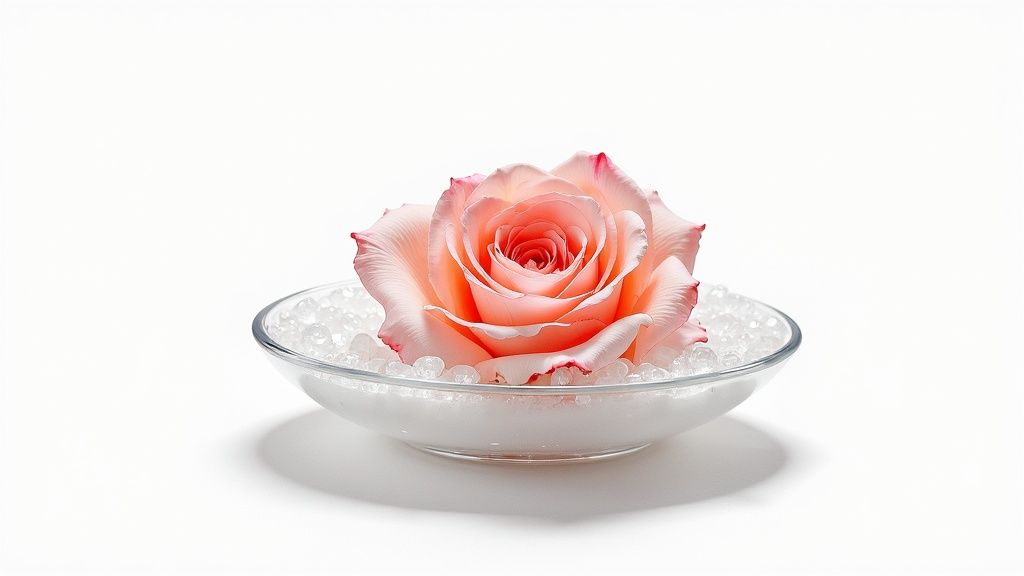
Start by pouring a 2–3 inch layer of silica gel granules into an airtight container. Nestle roses upright, prying petals gently apart so nothing gets crushed.
Seal the lid, then let them rest for 4–5 days. You’ll know they’re ready when the petals feel crisp but still look fresh.
- Watch the color indicator on your gel—it changes when moisture peaks.
- Aim for 65–70°F in the room to avoid over-drying.
- A soft paintbrush works wonders for sweeping away stray granules.
Key Indicators For Transition
If a petal snaps with a slight bend, you’ve nailed the silica stage. Overly crumbly edges mean you can shave about 12 hours off next time.
Hitting that sweet spot locks in the pigment without turning the bloom into a brittle husk.
Soaking Techniques And Timing
Whip up your glycerin bath using 1 part food-grade glycerin to 4 parts lukewarm water. Stir until it’s perfectly blended, then let it cool to room temperature—hot liquid can make petals go translucent.
Submerge just the stem bases, tilting them slightly. Top off the solution each day to keep your ratio on point. Most of my batches finish in 7–10 days.
“Combining silica gel with a mild glycerin soak delivered the best texture I’ve seen in premium roses,” says our lead florist.
One recent display required treating 100 long-stem roses this way, and every bloom held its bright reds, pinks, and ivories beautifully.
| Issue | Cause | Fix |
|---|---|---|
| Crumbly Edges | Over-drying in silica stage | Trim 6–12 hours from drying period |
| Dye Bleed | High glycerin concentration | Dilute solution further by 10% |
| Color Mismatch | Batch timing inconsistencies | Synchronize drying and soak dates |
For reliable results across mixed batches, always process stems together. Label each container with the start date and rose variety—this simple step prevents color drift and mix-ups.
Check out our guide on preserving roses with glycerin for more advanced tips and local consultation options at Fiore.
Fiore clients in Los Angeles can book an on-site session to fine-tune drying periods, glycerin ratios, and dye blends. Our team will match colors and textures perfectly for weddings, events, or retail displays.
Creative displays—think acrylic blocks or floating glass frames—show off the crisp form from silica and the gentle suppleness from glycerin in one striking presentation.
Caring For Preserved Roses And Extending Longevity
Once your roses have absorbed that glycerin goodness, gentle upkeep becomes the secret to a lasting display. Think of these blooms like delicate works of art—they thrive when humidity and temperature are just right.
Aim for humidity under 60% and a steady 65–75°F environment. Keep them out of harsh sunlight so the colors don’t wash out.
Studies show that under these conditions, glycerin-treated roses stay visually stable for 6–36 months, and in some top-tier cases, even up to 5 years. For a deeper dive, check out flower preservation on Wikipedia.
- Ideal Humidity: Below 60% to prevent brittleness
- Optimal Temperature: 65–75°F to avoid thermal shock
- Light Exposure: Indirect rays preserve vibrant pigments
- Airflow: Gentle circulation keeps mold at bay
Cleaning And Handling
Every few weeks, I reach for a soft lens brush—or even a clean makeup brush—to coax dust from between petals. A quick burst of canned air (kept under 20 psi) on the cool setting is another go-to.
For stubborn bits, a hairdryer’s cool shot from arm’s length lifts debris without baking the petals.
“A feather-light dusting regimen keeps preserved roses looking freshly cut.”
- Use a soft lens brush for tight spots
- Keep canned air pressure low and temperature cool
- Never spray household cleaners directly on blooms
- Rotate arrangements so every side gets fresh air
Protective Packaging And Storage
When the centerpiece role ends, I nestle stems in kraft-lined, breathable boxes. Silica packets tucked inside absorb any excess moisture, so petals stay supple.
For organized event prep, I label each batch with date and variety—no more frantic searches backstage.
- Open Vases: Let air swirl and showcase natural form
- Glass Domes: Shield from dust while letting light in
- Wall Frames: Suspend stems and minimize handling
- Acrylic Blocks: Encapsulate a single bloom for a modern twist
At a recent summer wedding in a humid venue, I elevated vases on pedestals, checked humidity each morning, and swapped in fresh stems from numbered tubes—keeping arrangements flawless all day.
Fiore Consultation Invitation
Need a hand turning your preserved roses into lasting keepsakes? Fiore’s local experts in Los Angeles offer same-day on-site visits to fine-tune humidity, packaging, or display layouts.
- In-person environment assessments
- Customized storage and packaging solutions
- Live-event troubleshooting and swaps
Reach out at Fiore Designs to book your consultation and ensure every rose looks perfect.
- Check stems monthly and gently dust petals for best results
Creative Displays And Fiore Consultation Services
When glycerin-treated roses find their way into custom displays, they instantly elevate any space. Imagine a single bloom floating under a crystal-clear dome or a cluster of petals pressed behind acrylic panels—each arrangement feels like living art.
Whether you’re designing a retail showcase or planning wedding décor, these installations make an immediate impression. And thanks to Fiore’s collaborative process, you won’t be left guessing about color, texture, or longevity.
- Glass Domes: A lone rose preserved under a glass bell makes for a sleek, modern focal point.
- Wall Frames: Stems stand upright between acrylic sheets, creating lush, three-dimensional art.
- Gift Boxes: Layered bouquets nestle inside elegant packaging—ideal for high-end gifting.
Market data shows glycerin preservation is driving the premium “forever rose” market, with preserved-rose pieces fetching 2–10x the price of fresh stems. These figures account for specialized chemical processing, custom dyes, and protective packaging. For a deeper dive, check out Verified Market Research.
Customized Glycerin Blends
Crafting the perfect hue and feel takes more than just pouring glycerin into a bucket. At Fiore, we fine-tune each solution—whether it’s a 1:1 mix for subtle suppleness, a richer 1:2 ratio for extra pliancy, or a bespoke formula for metallic sheens and jewel tones.
“Fiore’s glycerin blends and color-matching expertise turned our centerpieces into unforgettable heirlooms,” shares a recent bride.
Every Fiore package comes with:
- On-Time Delivery: Arrived exactly when you needed it—be it a grand opening or your big day.
- Professional Installation: Our team handles setup in Los Angeles venues, so you can focus on the moment.
- Personalized Consultation: In-studio or virtual, we nail down every detail—from dye depth to stem length.
For wedding pros seeking step-by-step preservation tips, explore our guide: How To Preserve Wedding Bouquets.
Reach out to Fiore early—ideally two weeks before your event—to lock in vibrant, color-matched blooms and boutique-quality service.
FAQs About Preserving Roses With Glycerin
When you’ve poured hours into crafting the perfect glycerin solution, the last thing you want is for those petals to betray you. Below, I’m sharing the questions I get asked most often—along with real-world fixes that really work.
How Long Do Glycerin-Preserved Roses Last In Everyday Conditions?
In a typical home—moderate humidity and soft, indirect light—your roses will stay supple and colorful for 6–12 months. Push the humidity below 60% RH, and I’ve seen displays hold their charm for 2–3 years.
- Check room humidity weekly to catch any spikes.
- Rotate your arrangements every few weeks to prevent one side from fading faster.
- Keep blooms out of direct airflow from heaters or air-conditioning vents.
Can I Substitute Other Humectants For Glycerin?
Glycerin remains the go-to because it absorbs just right and stays safe for your petals. I’ve experimented with propylene glycol—and ended up with unnaturally stiff blooms and odd color shifts.
“Using pure glycerin ensures your petals remain pliable without color shifts.”
For foolproof results, always grab food-grade glycerin from a reliable supplier.
What Steps Prevent Color Fading When Displaying Treated Roses?
Sunlight and heat are color’s worst enemies. I recommend a few simple routines to keep every hue vibrant:
- Install UV-filtering covers on display cases.
- Position your vases at least a few feet from east- or west-facing windows.
- Keep the room between 65–75°F and log temperature each morning.
Common Mistakes To Avoid
- Skipping the humidity check—sudden dryness can turn petals brittle overnight.
- Skipping small test runs on a new rose variety; not all cultivars absorb glycerin the same way.
- Forgetting to label batches—mix-ups on event day can lead to mismatched centerpieces.
On-Site Preservation Services For Events
Yes, Fiore brings the expertise right to your venue. Our mobile team handles glycerin application, custom dye matching, and timely delivery—so your wedding or gala blooms arrive flawless.
Expert Tip
Book your on-site session at least two weeks before the big day. That buffer ensures your centerpieces hit the mark—every time.
Reach out early to lock in your date and get a personalized quote.
Additional Tips
- Always trial one bloom first. It’s the quickest way to confirm color and texture.
- Mark each batch with the date and rose variety; trust me, you’ll thank yourself later.
Small tweaks at the start save major headaches down the line. Track your progress, tweak as needed, and watch your arrangements shine.
Fiore: Visit Fiore Designs to learn more about our personalized glycerin preservation services.


